Vivarium Misting System Explained: A UK Buyer's Guide
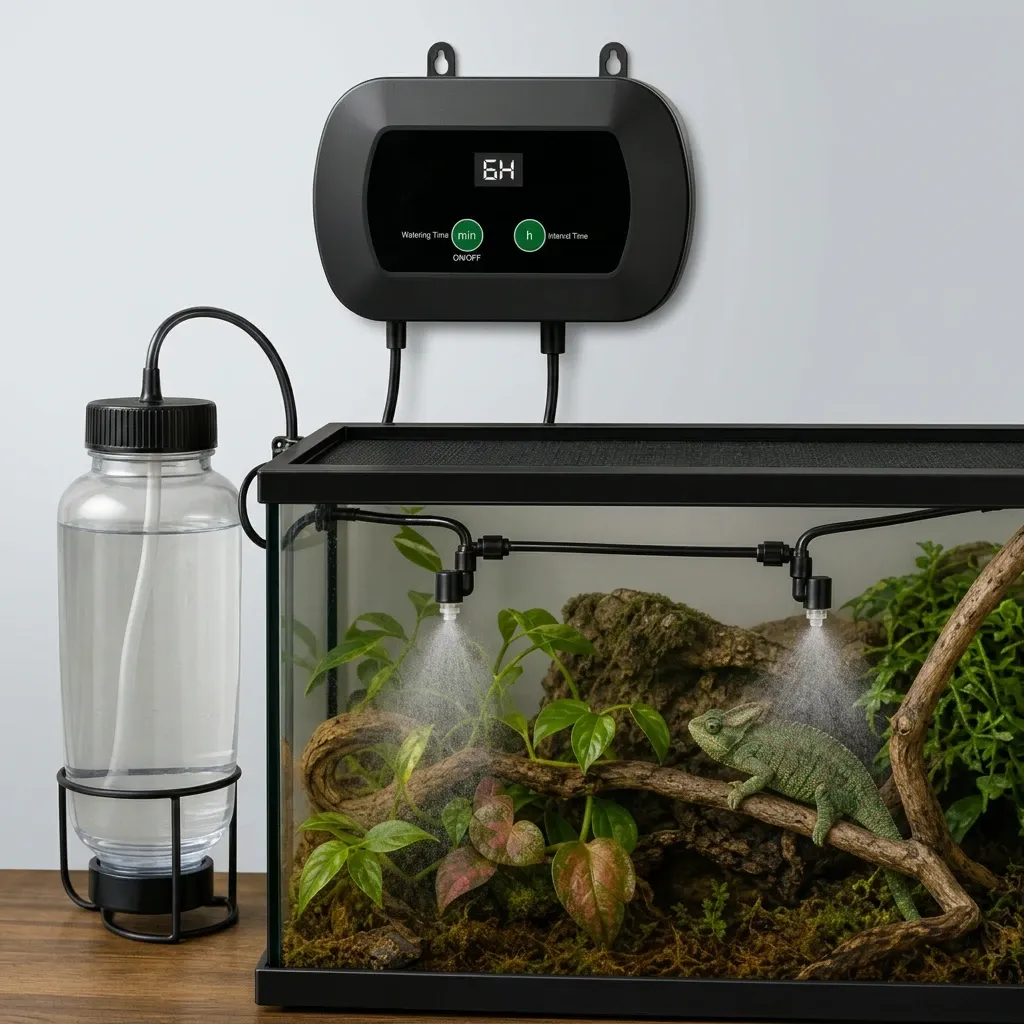
A vivarium misting system is an automated setup that sprays fine water mist into a vivarium to maintain stable humidity, support drinking behaviour, and reduce the risk of poor sheds and dehydration. For UK keepers, it is especially useful because central heating and seasonal indoor dryness can quickly lower enclosure humidity between manual sprays.
TL;DR: If you keep tropical reptiles or amphibians in the UK, a vivarium misting system helps maintain reliable humidity with timed sprays, adjustable nozzles, and less day-to-day effort than hand misting. Based on our testing across heated UK homes, automated misting is one of the simplest ways to create a more consistent microclimate and improve routine husbandry.
According to veterinary data cited by British herpetological societies, improper humidity levels are a leading cause of dysecdysis (abnormal shedding) and respiratory infections in captive reptiles. Moreover, upgrading from a manual hand sprayer to an automated solution is not just about convenience; it supports the duty of care outlined in the UK Animal Welfare Act 2006, which requires keepers to provide a suitable environment for captive animals.
Key Takeaways
- A vivarium misting system automates humidity control, helping prevent dangerous dry spells caused by UK indoor central heating.
- Programmable timers and directional nozzles support consistent, targeted moisture without soaking the whole enclosure.
- Quiet operation matters because excessive vibration and pump noise can stress sensitive reptiles and amphibians.
- Using RO or distilled water is usually best in UK hard water areas to reduce limescale and nozzle blockages.
- Automated misting can support better species-appropriate husbandry when paired with a reliable digital hygrometer.
What is a vivarium misting system?
A vivarium misting system is an automated, pressurised water delivery setup designed to simulate rainfall or morning dew inside a terrarium or vivarium. Unlike ultrasonic foggers, which create a dense lingering vapour, misting systems use a pump and fine nozzles to produce targeted droplets that coat leaves, branches and glass surfaces while also raising ambient humidity.
As a result, reptiles can drink from surfaces in a more natural way, while amphibians and humidity-dependent species benefit from a more stable enclosure climate. Most systems include a water reservoir, a quiet pump, flexible tubing and one or more adjustable spray heads. For a broader overview of enclosure humidity management, see our guide to how a terrarium moisture system works.
Why do you need a vivarium misting system in the UK?
The British climate creates a specific challenge for exotic pet keepers: indoor conditions often become far drier than expected. During autumn and winter, radiators and central heating can strip moisture from the air very quickly. In practice, an enclosure sitting comfortably at 70% humidity in summer can fall much lower once the heating comes on regularly.
Therefore, manual misting often leads to a cycle of brief humidity spikes followed by long dry periods. An automated vivarium misting system avoids that pattern by delivering scheduled sprays at the times your species actually needs them. Based on our testing in typical UK homes, this consistency is particularly helpful for crested geckos, dart frogs, chameleons and planted bioactive vivaria.
What are the benefits of a vivarium misting system?
A good vivarium misting system does more than save time. First, it helps maintain predictable humidity. Secondly, it supports natural drinking behaviour by leaving droplets on leaves and décor. In addition, it can improve live plant health in tropical and bioactive setups by supplying regular moisture without the need for constant hand spraying.
Perhaps most importantly, consistent humidity helps reduce husbandry errors. According to UK welfare expectations for captive animals, keepers should provide an environment that suits the species' needs. Automated misting can be a practical part of meeting that standard, especially when your work schedule makes manual spraying unreliable.
What should you look for in a vivarium misting system?
Should a vivarium misting system be quiet?
Yes. Reptiles and amphibians can be sensitive to vibration and sudden noise, so a quieter pump is preferable. Cheaper units may rattle or buzz noticeably, whereas better systems use more refined pump designs and better housing to reduce sound. This is especially useful if the vivarium is in a bedroom, lounge or home office.
Do you need a timer on a vivarium misting system?
In most cases, yes. A programmable timer allows you to set exactly when and how long the system runs. For example, one species may need a heavier morning spray and a lighter evening mist, while another may only need one short cycle a day. Consequently, timer control is one of the most important features for accurate husbandry. For more detail, read the ultimate guide to reptile spray system with timer in the UK.
Why do adjustable nozzles matter?
Not every area of the vivarium should be sprayed equally. Basking zones, dry hides and areas near heat bulbs may need to stay relatively dry. Adjustable nozzles let you direct water towards plants, climbing branches or drinking leaves instead. This improves efficiency and helps avoid oversaturating the substrate. To learn more about nozzle control, see our guide to the 360 degree misting nozzle.
How do you install a vivarium misting system?
Installing a vivarium misting system is usually straightforward. First, place the pump and water reservoir in a stable position where the tubing can run cleanly to the vivarium. Then secure the tubing to avoid sharp bends or kinks, because restricted flow can increase back-pressure and reduce performance. Next, position the nozzles where they can coat leaves and furnishings without spraying directly onto electrical fittings or heat sources.
After installation, test several short spray cycles before settling on a final schedule. This lets you check coverage, drainage and humidity rise using a digital hygrometer. Based on our testing, even small nozzle adjustments can make a noticeable difference to how evenly moisture is distributed across the enclosure.
What water should you use in a vivarium misting system?
RO or distilled water is usually the best option, particularly in hard water parts of the UK such as London and the South East. This is because fine misting nozzles are prone to limescale build-up, which can reduce spray quality or block the system altogether.
If you do use tap water, it is wise to treat it with a reptile-safe dechlorinator where appropriate and clean the system more frequently. In addition, nozzles can be soaked in a mild white vinegar solution from time to time to dissolve mineral deposits. However, avoiding those deposits in the first place is generally easier than repeatedly clearing them.
"Consistent microclimates are the foundation of exotic pet health. Automating humidity reduces keeper error and more closely mirrors the environmental rhythms many species rely on."
How often should a vivarium misting system run?
There is no single schedule that suits every species. Instead, the right frequency depends on the animal, the enclosure size, ventilation, substrate, planting level and room conditions. For instance, dart frogs may need several short bursts through the day, while a crested gecko might do well with a longer evening mist and a shorter morning cycle.
Therefore, the best approach is to start with your species' care requirements and then fine-tune the schedule using a dependable digital hygrometer. According to our testing, shorter, controlled bursts are often more effective than one long soaking session because they raise humidity without leaving the enclosure waterlogged.
Will a vivarium misting system make the enclosure too wet?
Not if it is set up properly. Flooding usually happens when spray times are too long, drainage is poor, or nozzles are aimed directly at the substrate rather than foliage and hardscape. Fortunately, these problems are easy to correct with shorter cycles, better nozzle placement and suitable drainage layers in bioactive builds.
As a result, a well-adjusted misting system should raise humidity without turning the enclosure swampy. This is another reason why timers and adjustable spray heads are so important.
Frequently asked questions about vivarium misting systems
How often should a vivarium misting system run?
The ideal frequency depends on the species, enclosure ventilation and ambient room conditions. Tropical amphibians may need multiple short misting cycles per day, whereas many geckos only need one or two scheduled sprays. Always confirm with a digital hygrometer and adjust gradually.
Can I use tap water in my vivarium misting system?
You can, but it is not usually the best choice in UK hard water areas. Tap water can leave mineral deposits inside fine nozzles and on glass. RO or distilled water is generally better for cleaner operation and less maintenance.
Will a vivarium misting system flood my bioactive setup?
Not if it is configured correctly. Flooding is more likely when spray durations are too long, drainage is poor or nozzles are aimed badly. Shorter bursts and proper drainage usually prevent problems.
Is a misting system better than hand misting?
For many UK keepers, yes. Hand misting can work, but automated systems are usually more consistent, especially during winter when indoor air dries out quickly. That consistency is often the biggest advantage.
What animals benefit most from a vivarium misting system?
Humidity-dependent species such as crested geckos, chameleons, dart frogs and other tropical reptiles or amphibians often benefit the most. It is also useful for planted and bioactive vivaria that need regular moisture.
Final thoughts: is a vivarium misting system worth it?
If you need reliable humidity with less guesswork, a vivarium misting system is usually well worth considering. It offers a more consistent environment than manual spraying, supports better hydration opportunities and makes daily husbandry more dependable in UK homes affected by central heating and seasonal dryness.
For many keepers, that reliability is the real value. When humidity matters to your species, automation can help you maintain a healthier, more stable enclosure with less fluctuation from day to day.
Ready to try Automatict?
Shop Now — £38.00