The Ultimate Guide to Reptile Spray System With Timer in the UK
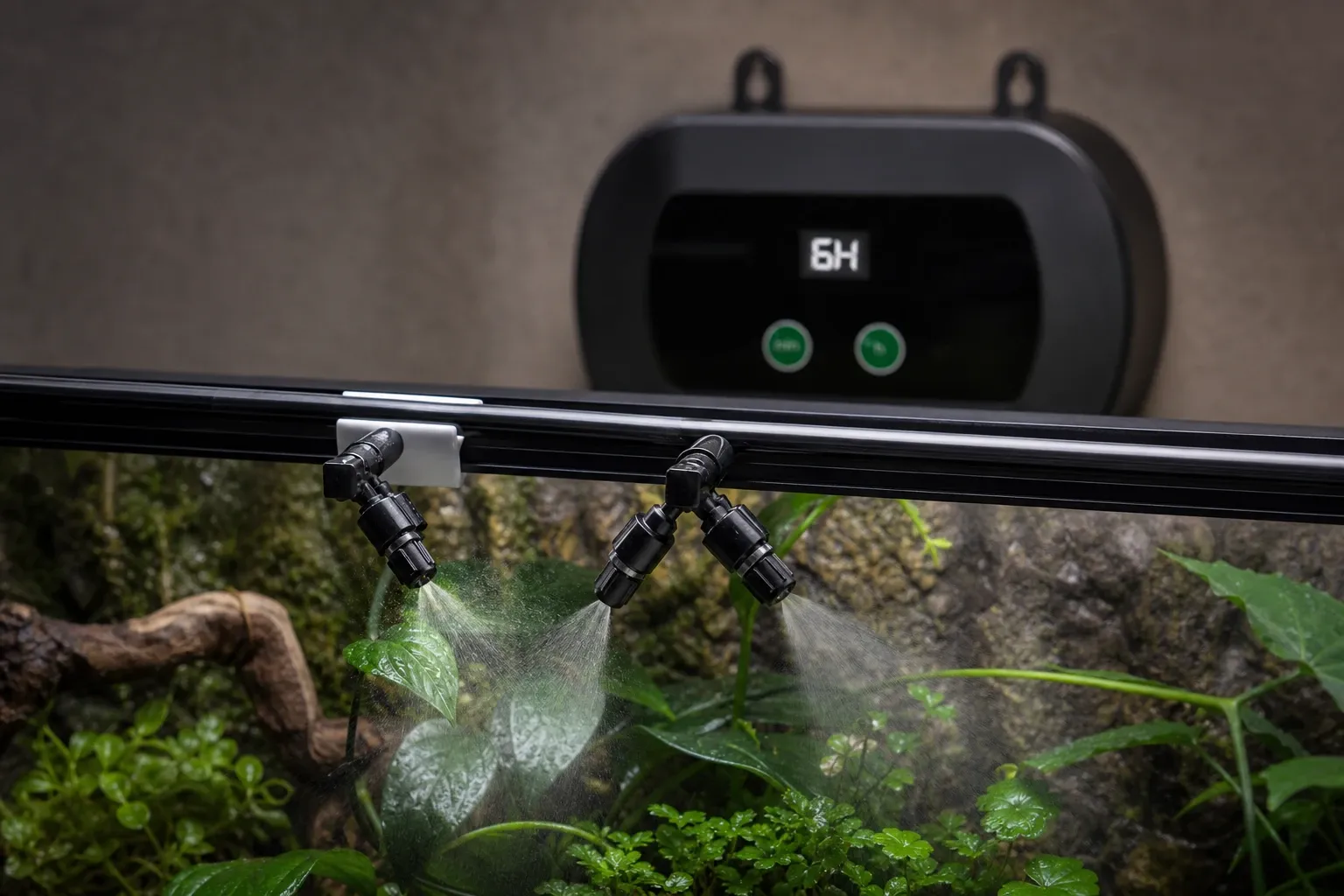
If you are looking for a reptile spray system with timer, the best option is an automatic misting setup that delivers short, controlled sprays throughout the day to maintain stable humidity, support drinking behaviour, and reduce the risks linked to dry UK homes. For most UK keepers, a timed spray system is more reliable than hand-misting because it creates consistent moisture levels even when you are out, asleep, or away for the weekend.
TL;DR: A reptile spray system with timer helps maintain species-appropriate humidity by misting your vivarium automatically at set times. Based on our testing in centrally heated UK homes, timed misting is one of the simplest ways to avoid sudden humidity drops, improve shedding, and encourage natural drinking behaviour in species such as chameleons, crested geckos and dart frogs.
Maintaining the right environment for captive exotics in the UK presents a unique challenge. British weather is notoriously unpredictable, while central heating often strips vital moisture from the air during colder months. As a result, species from tropical rainforests or humid subtropics can develop serious health problems, including dysecdysis (retained shed) and respiratory issues. Manual hand-spraying is not only labour-intensive; it also tends to cause sharp humidity spikes followed by rapid crashes.
Therefore, automation is usually the most practical solution. A reliable reptile spray system with timer helps create a stable, species-appropriate microclimate by mimicking natural dew and rainfall patterns. This guide explains how these systems work, why they matter for reptile welfare in the UK, and how to set one up properly.
What should you know before buying a reptile spray system with timer?
- A reptile spray system with timer helps prevent the harmful humidity swings often caused by manual hand-misting.
- According to UK animal welfare requirements, keepers must provide a suitable environment for their animals, including correct humidity where needed.
- In many parts of the UK, hard water makes RO or distilled water the safer choice to reduce nozzle blockages and mineral marks on glass.
- Accurate programming lets you mimic natural daily cycles for species such as chameleons, crested geckos and dart frogs.
Why do UK reptile keepers need a reptile spray system with timer?
The keeping of exotic pets in the UK has grown quickly; however, our climate remains very different from the natural habitats of most commonly kept reptiles and amphibians. Improper temperature and humidity are among the most frequent causes of preventable illness in captive reptiles.
According to UK welfare expectations under the Animal Welfare Act 2006, keepers have a duty to provide a suitable environment. In practice, that means maintaining correct heat, light and humidity for the species being kept. When central heating runs from autumn through spring, indoor humidity in British homes can fall below 30%. For species such as Panther Chameleons or Amazon Milk Frogs that need far higher humidity, this can become a real health risk.
A reptile spray system with timer solves this by releasing precise bursts of fine mist at pre-set intervals. Consequently, it reduces human error and keeps conditions steadier across the day. Whether you are at work or away overnight, your enclosure still receives regular moisture rather than relying on memory or convenience.
How does a reptile spray system with timer work?
A good automatic misting system usually includes four main parts: a water reservoir, a pump, a timing unit and one or more nozzles. Together, these parts deliver timed sprays that raise humidity and wet leaves or décor surfaces for drinking.
What does the pump do in an automatic misting system?
The pump is the core of the setup. Unlike simple foggers that produce low-lying vapour mainly for visual effect, a proper misting pump creates enough pressure to push water through fine nozzles as micro-droplets. This helps coat leaves, branches and background surfaces evenly while avoiding instant waterlogging.
Why is the timer important on a reptile spray system?
The timer controls how often and how long each misting cycle runs. That precision matters because different species need different patterns. For example, one enclosure may benefit from several short sprays during daylight hours, whereas another may need one heavier morning cycle followed by lighter top-ups later in the day.
How do misting nozzles affect performance?
Nozzles influence droplet size and spray coverage. Higher-quality nozzles usually offer better consistency and directional control, which helps you aim water onto plants and climbing branches instead of directly onto basking lamps or electrical fittings. For a deeper understanding of nozzle design and water spread, read our 360 Degree Misting Nozzle Explained: A UK Buyer's Guide.
What are the benefits of using a reptile spray system with timer?
A timed misting setup offers more than convenience. In fact, it can play an important role in day-to-day preventative care by helping maintain correct hydration cycles and enclosure conditions.
Can timed misting help with shedding?
Yes. Reptiles need suitable humidity to shed cleanly. In dry environments, old skin can stick to toes, tail tips and eye caps. Over time, retained shed can restrict circulation and lead to more serious complications. A reptile spray system with timer helps maintain consistent moisture levels so shedding conditions are more reliable.
Does an automatic spray system help reptiles drink?
For many arboreal species, yes. Chameleons and some geckos often prefer drinking droplets from leaves rather than standing water bowls. Based on our testing with planted arboreal setups, scheduled morning sprays are especially useful because they imitate natural dew formation just after lights come on. As a result, reptiles are more likely to drink naturally.
"According to exotic veterinary guidance commonly referenced by keepers, chronic low-level dehydration is strongly linked with kidney stress in arboreal reptiles. Replicating natural rainfall patterns can therefore support healthier drinking behaviour."
Can improper humidity affect respiratory health?
Yes; however, balance is essential. Air that is too dry can irritate respiratory tissues, while conditions that stay overly wet and stagnant may encourage harmful bacterial or fungal growth. Therefore, timed spraying works best when paired with proper ventilation so enclosures cycle between damp and drying phases rather than remaining constantly soaked.
How often should you run a reptile spray system with timer?
There is no single schedule that suits every species. Instead, your programme should reflect natural habitat type, enclosure size, ventilation levels and your home's ambient humidity.
What is a good misting schedule for tropical rainforest species?
Tropical species such as dart frogs or some tree-dwelling boas generally need consistently high humidity. A common approach is one longer morning spray followed by shorter bursts every few hours through the day. This helps maintain elevated humidity without leaving every surface permanently saturated.
What is a good misting schedule for chameleons and arboreal lizards?
Many arboreal lizards do well with short sessions timed around lights-on and later daytime intervals. In our experience, shorter bursts often work better than long soaking cycles because they provide drinking opportunities while allowing adequate drying between sprays.
Do drier species need an automatic spray system?
Sometimes yes, but usually less often. Species from arid or semi-arid habitats may only need occasional light spraying in specific zones or during certain periods such as shedding cycles. In these cases, overuse can be more harmful than underuse, so careful programming matters even more.
Ready to try Automatict?
Shop Now — £38.00