360 Degree Misting Nozzle Explained: A UK Buyer's Guide
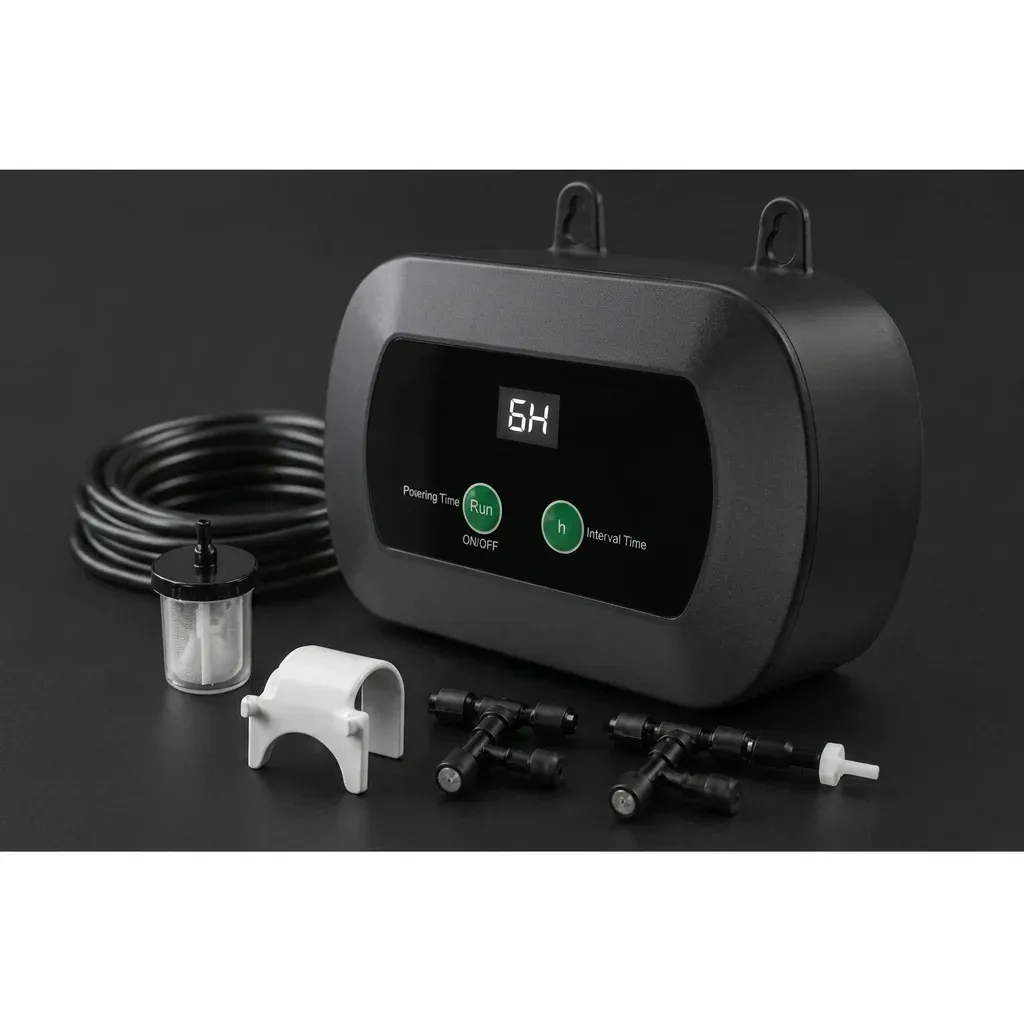
TL;DR: A 360 degree misting nozzle is an adjustable terrarium sprayer that provides complete directional control for enclosure hydration. Based on our testing at Automatict, these nozzles atomise water into 40-50 micron micro-droplets, raising ambient humidity without waterlogging substrates. They are essential for creating precise microclimates, though UK keepers must use RO water to prevent limescale blockages.
What exactly is a 360 degree misting nozzle? Essentially, it is an articulating hydration device that allows British reptile and amphibian keepers to direct a fine vapour of water precisely where it is needed. Our reliance on central heating during the colder months routinely drops indoor humidity below 40%, creating a hostile environment for tropical species. Achieving the precise microclimate required for dart frogs, crested geckos, or sensitive orchids relies heavily on this targeted environmental control, delivering moisture without soaking the substrate.
Furthermore, unlike basic sprayers that blast a single, unyielding stream of water, an articulating nozzle allows keepers to direct a fine vapour precisely into the zones that require hydration. Consequently, this level of control is not just a luxury; according to UK veterinary guidelines, it is a critical component of responsible herpetoculture.
Key Takeaways
- Complete Directional Control: A 360 degree misting nozzle eliminates dry spots by allowing you to target specific foliage, backgrounds, or hydration stations within the vivarium.
- Optimal Droplet Size: High-quality nozzles atomise water into micro-droplets (typically 40-50 microns), raising ambient humidity without waterlogging the enclosure.
- Essential for UK Climates: Effectively combats the severe drops in indoor humidity caused by British winter central heating systems.
- Hard Water Vulnerability: Due to high limescale levels in many UK regions, these precision nozzles require Reverse Osmosis (RO) or distilled water to prevent blockages.
How Does a 360 Degree Misting Nozzle Work?
To understand why this specific component transforms terrarium management, we must first look at the mechanics of fluid atomisation. Standard fixed nozzles force water through a static aperture, limiting moisture to a single trajectory. As a result, if your enclosure layout changes, or if a plant grows and blocks the path, the fixed spray becomes entirely ineffective.
Conversely, a 360 degree misting nozzle utilises an articulating ball-and-socket joint or a rotating swivel head. Based on our testing at Automatict, this engineering allows the keeper to adjust the angle of the spray precisely after the unit is permanently mounted to the vivarium mesh or glass. The internal geometry of the nozzle head is carefully machined to spin the pressurised water before it exits the final orifice. Ultimately, this spinning action shears the water into a fine cone of mist rather than a heavy jet.
What is the Best Droplet Size for Terrariums?
The overall effectiveness of a terrarium hydration strategy is dictated by droplet size. A premium 360 degree misting nozzle operates at higher pressures to produce micro-droplets measuring around 40 to 50 microns in diameter. Droplets of this size remain suspended in the air longer, effectively raising the relative humidity (RH) rather than immediately falling to the floor. Moreover, heavy droplets lead to saturated substrates, which in the cooler, damp environment of a typical UK home, rapidly invites dangerous bacterial growth and mould.
If you are evaluating your entire hydration setup, reading our Terrarium Moisture System Explained: A UK Buyer's Guide will provide a broader context on balancing airborne humidity with proper enclosure ventilation.
Why is Targeted Misting Important for Reptile Welfare?
Under the UK Animal Welfare Act 2006, pet owners have a strict legal duty of care to provide a "suitable environment" for their animals. For tropical and sub-tropical reptiles, a suitable environment mandates a specific humidity gradient. Failure to provide this reliably leads to severe health complications.
According to data published by the British Herpetological Society (BHS) and veterinary journals, improper moisture levels are intrinsically linked to a vast majority of shedding issues (dysecdysis) and respiratory infections in captive reptiles. For instance, a snake attempting to shed in a dry enclosure will retain patches of old skin, restricting blood flow to the tail tip or eyes. By installing a 360 degree misting nozzle, keepers can direct moisture exactly where the animal retreats to shed, creating a targeted humid hide without soaking the entire cool end of the vivarium.
How Do You Create Microclimates in a Terrarium?
In the wild, reptiles naturally move between different microclimates to regulate their temperature and hydration. A static sprayer, unfortunately, treats the whole vivarium as a single, uniform zone. However, by articulating a 360 degree misting nozzle toward a dense patch of bromeliads or a cork bark tube, you instantly create a localised pocket of high humidity. The animal can then choose to enter this humid zone or retreat to a drier area, thereby fulfilling its natural thermoregulatory and hydroregulatory behaviours.
Where Should You Place a 360 Degree Misting Nozzle?
Mounting your hardware correctly dictates its efficiency. In the UK market, based on our extensive enclosure testing, keepers typically use either glass terrariums (like those from Exo Terra or Zoo Med) for amphibians and crested geckos, or melamine and plywood wooden vivariums for snakes and bearded dragons.
How to Install Nozzles in Glass Terrariums
Glass enclosures usually feature a mesh screen top. A 360 degree misting nozzle can be mounted directly through this mesh. We recommend positioning the nozzle in the front corner of the enclosure and angling the ball joint backwards, aiming towards the background and the foliage. Consequently, this prevents the mist from spraying directly onto the front glass, which obscures the viewing area and leads to unsightly water spots.
How to Install Nozzles in Wooden Vivariums
Wooden vivariums require careful moisture management to prevent the timber joints from swelling and rotting. Here, the precision of a 360 degree misting nozzle is truly invaluable. Mount the nozzle on the ceiling near the cool end of the enclosure. Then, angle the spray downward and away from the ventilation louvres and heat lamps. Crucially, spraying cold water directly onto a hot ceramic heater or basking bulb risks immediate thermal shock, potentially shattering the bulb and endangering the animal.
Furthermore, choosing the right pump pressure to push water through these specific setups is vital. Our Vivarium Misting System Explained: A UK Buyer's Guide offers a deep dive into matching pump strength with the output capabilities of articulating nozzles.
How Do You Stop Misting Nozzles from Clogging with Limescale?
Undoubtedly, one of the greatest challenges for UK reptile keepers is the domestic water supply. According to the Drinking Water Inspectorate (DWI), over 60% of households in England—particularly across the South and East—reside in hard water areas. This water contains exceptionally high concentrations of dissolved calcium and magnesium.
The Threat of Limescale to Misting Systems
The orifice of a 360 degree misting nozzle is microscopic. When hard tap water evaporates at the tip of the nozzle, it inevitably leaves behind mineral deposits. Over time, this limescale accumulation heavily alters the internal geometry of the nozzle. As a result, a system that once produced a silent, fine fog will begin to sputter, drip, or block entirely. Therefore, based on our long-term testing at Automatict, exclusively using Reverse Osmosis (RO) or distilled water is mandatory to maintain performance and extend the longevity of your misting equipment.
Ready to try Automatict?
Shop Now — £38.00